

Questions about hub spacing conversions are received nearly on a weekly basis. The answer is almost always the same: in most cases it can be done, but it might not be the most sensible way to go forward.
Read further to learn what goes into converting a hub spacing from one standard to another in the most frequently asked cases.
The Prerequisites
First, it’s highly useful to read through the earlier published, and quite thorough article about the matter.
The main takeaway from the article is the table which showcases the different spacing standards that share the same hub shell – as well as those which do not.
In the former case, the conversion is quite simple, and might be achieved by just swapping the axle endcaps. In some cases, more components are needed, like the hub axle itself.
In the latter cases, the situation is quite a bit more complex.
MTB to Boost
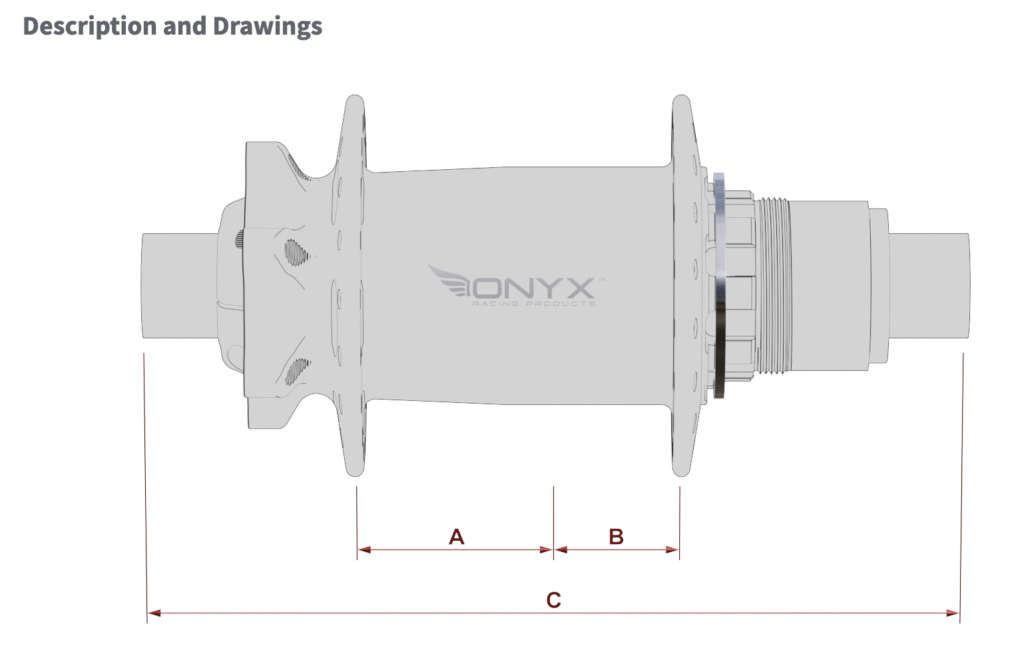
| Standard | A | B | C | Spoke tension (left/right) |
| MTB (142x12mm, | 32.7mm | 19.92 mm | 142 mm | 61/100 % |
| Boost (148x12mm) | 35.7mm | 22.8 mm | 148 mm | 65/100 % |
As seen from the table above, the flange spacing differs between the MTB, and Boost-sized Classic hubs. This in turn means that the shells themselves are different, and a fitting a different endcaps onto an MTB hub simply won’t do.
In turn, the following components need to be replaced:
- Hub shell
- Axle
If the hub uses the older 1-piece driver, then some additional parts are needed to modernize the hub with an MFU axle assembly. Additional parts include the following:
- Endcap, right/driveside
- Endcap, left
- MFU driver assembly
- MFU freehub driver body
The parts in question form a price of 60-70% of a new hub. If some wearables need to be replaced at the some time, like bearings, the costs rise even higher.
Boost to Super Boost
Another somewhat frequently asked question is that if a Boost hub can be converted into Super Boost? If you’re not familiar with the Super Boost standard, refer to the article below to learn all the essentials about it.
The situation is identical as in the previous case, when thinking about converting an MTB spacing to Boost. At least a new axle, and a hub shell are needed, and in some cases even more.
Changes in Axle Diameter
Lastly, it’s good visit the axle diameter subject briefly. Luckily enough, these conversions can be made in most cases, and quite easily.
The Classic, and Vesper hub lineups are designed to be as modular as possible. A good example of this is that a Classic, or Vesper front hub can be run on 12, 15mm or even 20mm axle. In all cases, the hub shell remains the same. Only the axle, or the endcaps differ. See the relevant products below for making the conversion.
The same applies to the BMX lineup.
Summary
Hopefully, this article clears up the often asked, and potentially somewhat confusing subject. If any questions remain, please send an email at info(at)onyxhubseurope.com, and your matter will be taken care of.