

Super Boost is (commonly) used hub standard alongside the Boost hub standard. This text takes a deeper look at the standard, what it is all about and what benefits are on offer.
The Dimensions
First, it’s worth starting with the dimensioning, i.e. what numbers the Super Boost standard uses. The standard – and by a fair margin dominant – Boost standard uses a 148-millimeter hub spacing at the rear. The Super Boost is 9 mm longer than, utilizing a 157-millimeter width.
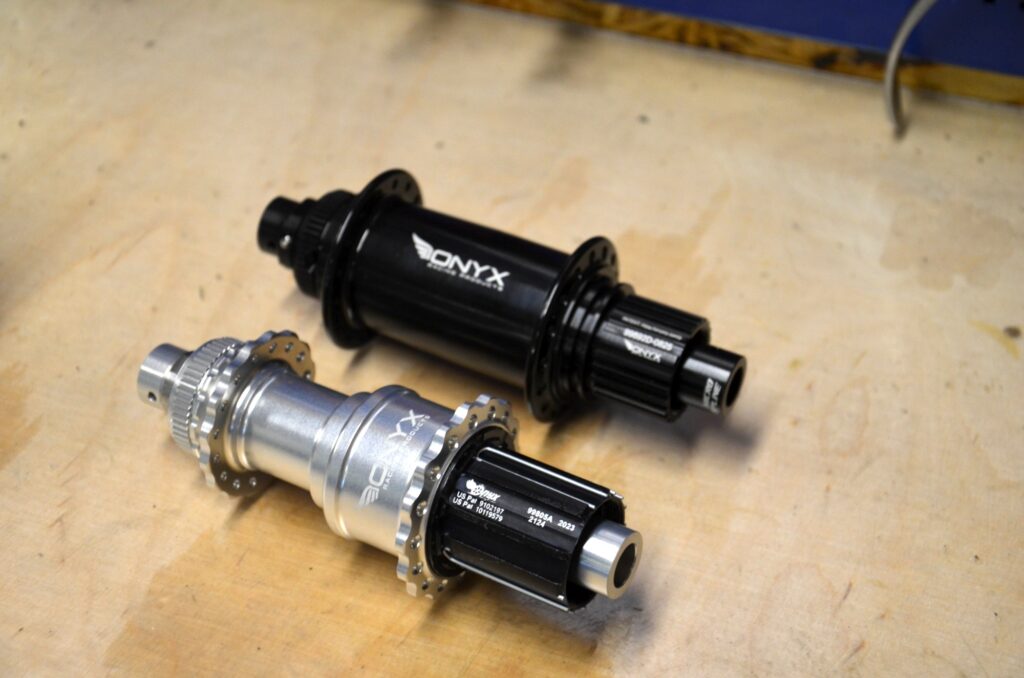
There is no difference in the dimensioning of the front hubs. The Super Boost rear hub uses a standard Boost-dimensioned 110×15 mm front hub or, if the front fork requires it, a 20-millimeter version of the same standard.
It is worth noting that the Super Boost standard shares a surprisingly large amount of common ground with the “old DH standard”, i.e. 150 mm wide rear hubs. The only difference is that on Super Boost hubs the hub endcaps are 3.5mm longer on both sides. The width of the hub flanges and the position of the brake disc on the hub are both the same.
The Benefits
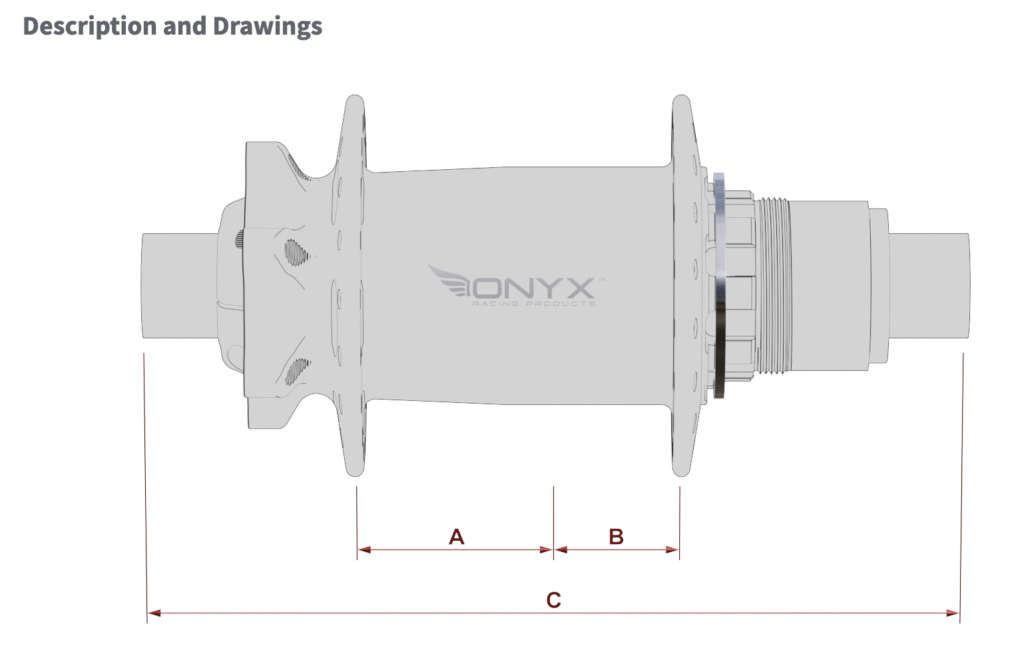
| Standard | A | B | C | Spoke tension (left/right) |
| Boost | 35.7mm | 22.8 mm | 148 mm | 64/100 % |
| Super Boost | 38.35 mm | 27.42 mm | 157 mm | 72/100 % |
The dimensions show that the wider mounting width of the Super Boost model has been fully utilized in the positioning of the flanges. The wider flanges make the disc stiffer and also stronger by equalizing the tension between the left and right spokes.
In side-to-side comparison, the hub widths look as follows on Classic MFU CL hubs.
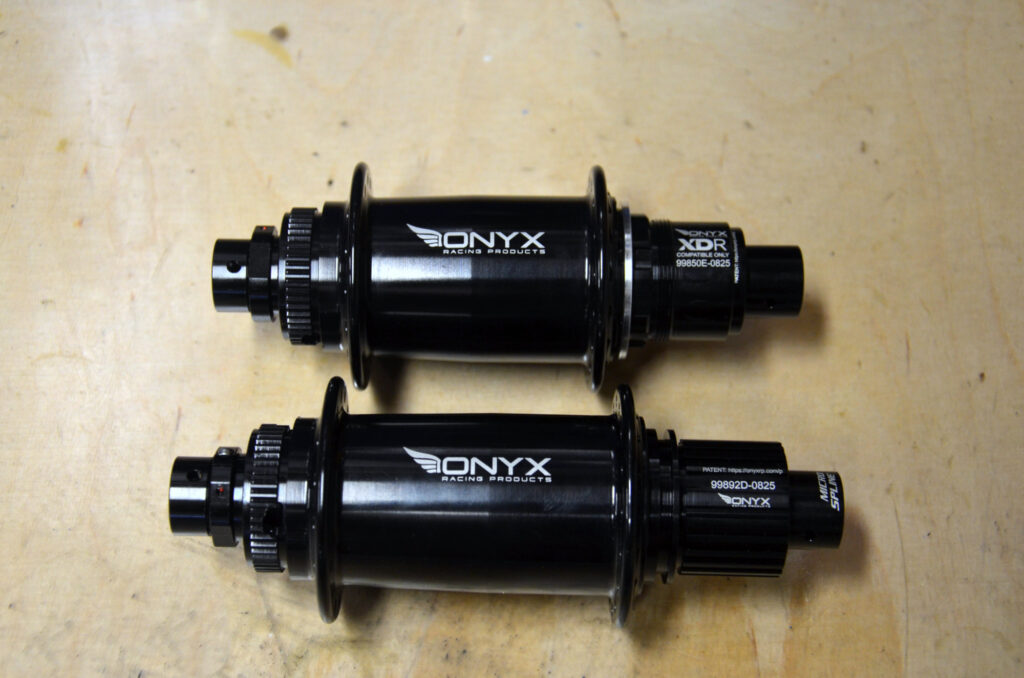
In addition to the stiffer disc construction, the Super Boost standard can offer a clear advantage in the form of a better chainline when used with a standard 73mm BSA bottom bracket (or equivalent).
Most Common Uses
Typically, the Super Boost standard is found in DH bikes. However, there is no reason why it cannot be used in any type of mountain bike. A few manufacturers have taken the bold step and applied the standard throughout their range, or at least in a large part of it.
The prevalence in DH or generally gravity-type bikes is probably related to the fact that bikes in this category want to have the strongest possible wheel structure, which the use of the Super Boost standard also enables.
Conversion Options
A common question is, can a Boost hub be converted to a Super Boost? The answer is both yes and no. As can be seen from the previous section, the hub shell parts are dimensioned differently in the standards, which is why it is not possible to make the conversion in a way that enables one to gain the benefits of the Super Boost standard with a Boost hub.
Availability
If your bike needs new Super Boost standard hubs or custom-built wheels, the range includes the following options.
Onyx Classic MFU Super Boost Centerlock, 32H, Anodized Black
Onyx Classic MFU Super Boost ISO, 32H, Anodized Black