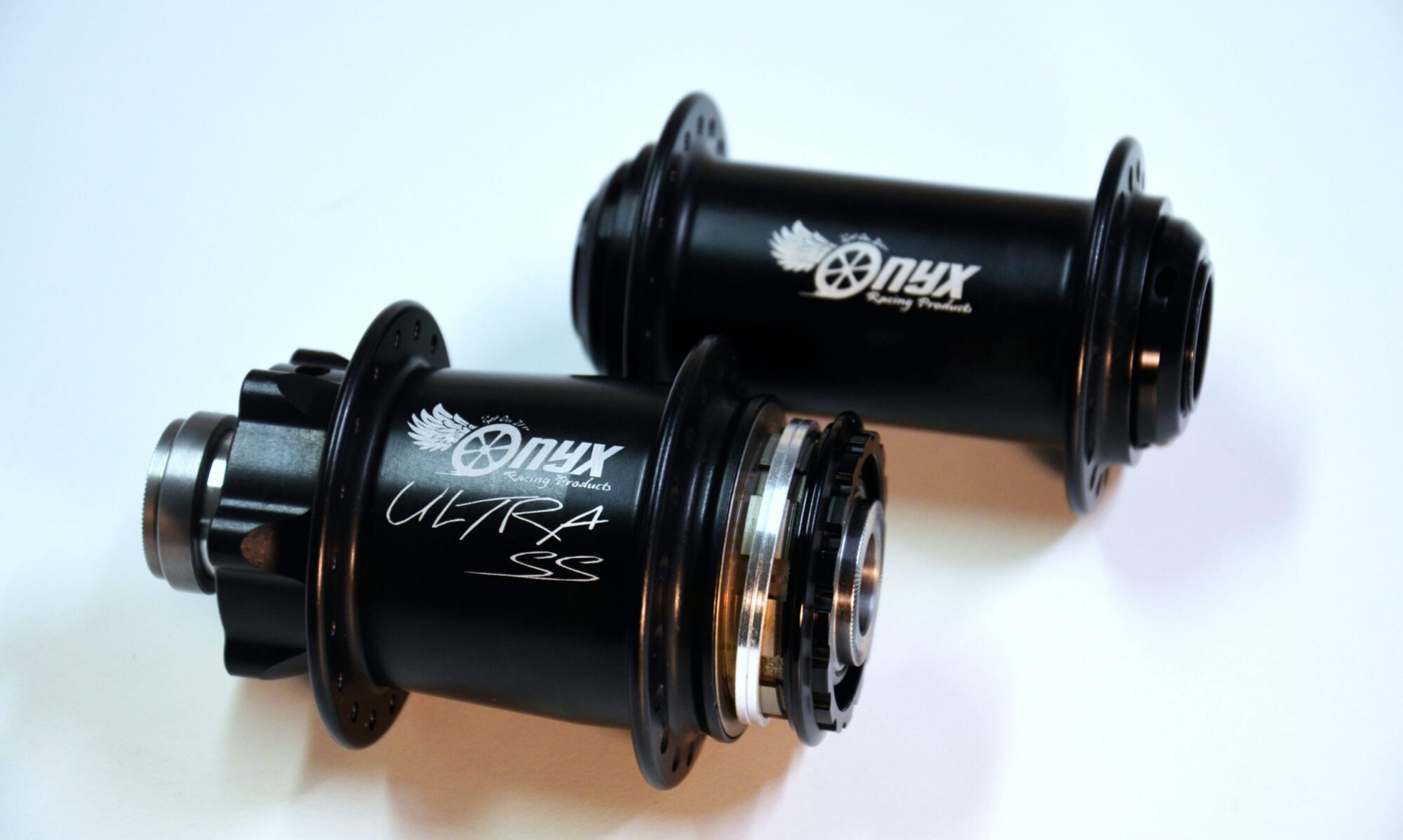

A question nearly as old as time is which hub to choose; the Classic or the Vesper? After reading this article you will have all the necessary knowledge to make an informed decision.
Use Case
The driving factor behind the decision is the intended use. What type of riding will you be doing? What type of bike are you riding, and what type of rider you are? A direct quote from Onyx’s homepage goes a long way in this regard.
”Choosing between Classic and Vesper hubs? The Vesper product line is our lightest cross-country and trail hub. The Classic product line is designed for heavier activities like electric-assist bikes, bike packing, tandems and bigger riders.”
To summarise, if you’re a big and/or strong rider, put a lot of stress on components, ride a heavily loaded bike, or simply want the maximum amount of robustness, and reliability, the Classic model is the right choice. Other clear reasons to go for the Classic model include Ebike, gearbox, and single-speed use.
Consequently, the Vesper lineup is designed for road, gravel, trail, and XC use, and excels in those use cases. When it comes to strength, they can hold their own in the most demanding scenarios, including some notable mountain bike events organised by Red Bull in which the Vesper hubs have been ridden multiple times.

It’s the scenarios outside the clear edge cases when things get more interesting. To get a clearer understanding of the two models, a deeper look inside of them is warranted.
Sprag Clutch Mechanism
The Classic hubs run on two-full width sprag clutches with an ample amount of contact surface area between the driver, and the hub shell. In turn, the Vesper hubs on one full-width, and one half-width clutch assembly. In other words, the Vesper sprag clutch assembly width is 75% compared to the Classic.

Other than the width, both hubs share identical design, and nearly identical MFU axle assembly. The only difference is that the driver assembly, and the steel sleeve inside the hub shell are shorter on the Vesper hub to match the narrower sprag clutch mechanism width. Other than that, everything else is the same: 6805 driver support bearing, 6804 center bearing, materials used etc.
When it comes to performance, and ride feel, no difference is felt. Both hub models share the same instant engagement, and feel. Thanks to the double full-width sprag clutch assembly, the Classic hub has a higher torque, and power output rating all the way being rated for mid-motor EMTB’s with up to 1.5kW output. The Vesper is rated for traditional bikes only.
Bearing Sizes
Stout build, and robustness runs through the Classic lineup, and it’s no surprise that it reaches all the way up to bearing sizes used. It’s more than likely, that any standard mountain bike hub will run on bigger bearings than the Classic. The bearing size break-down is as follows:
| Model | Type | Disc Standard | Brake side bearing | Center bearing | Right/Driver support bearing |
| Classic | Front | ISO | 6805 | – | 6805 |
| CL | |||||
| Rear | ISO | 6804 | 6804 | ||
| CL | 6902 |
It’s worth noting that the CL version of the Classic hub uses a smaller bearing on the NDS side in the rear.
Consequently, the Vesper hubs run on following bearings:
| Model | Type | Disc Standard | Brake side bearing | Center bearing | Right/Driver support bearing |
| Vesper | Front | ISO | 6805 | – | 6804 |
| CL | |||||
| Rear | ISO | 6902 | 6804 | 6805 | |
| CL | 6902 |
Hub Shells
In order to save weight without compromising function or performance, the hub shell flange sizes have been minimized in the Vesper hubs. In practical terms, this means the smallest flanges possible while still being able to lace the hubs in a sensible manner without unnecessary acrobatics.
The Centerlock (CL for short) disc rotor mounting standard enables this aspect in full because of the smaller diameter of the disc rotor interface. This feature is taken advantage of in full on Vesper CL models. The flange sizes have been dimensioned to the smallest possible size, which creates sleek looks, and the least amount of material used. The same applies to Classic CL hubs as well, but not to the same extent.
If your’e looking for the lightest variant hub on Onyx lineup, and a rotor mounting interface that’s easy to work on, then the CL version is a good choice on either one of the hub models.

Weights
For many riders, the question between Classic and Vesper models is related to hub weights. Albeit it’s a factor to consider, often times it’s thought as a bigger factor than it actually is. Sure, weight matters if one is striving to build the lightest bike possible. However, the effect on ride feel of few dozen grams on a hub is something that very few riders can sense.
Having said all these, the weights of some the most popular rear hub models are listed below for comparison. All the numbers listed are with aluminium MFU freehub driver bodies.
| Model | Intended use | Weight (g) |
| Classic Boost 148x12mm ISO, 32H, XD(R) | (E)MTB | 439 |
| Vesper Boost 148x12mm ISO, 32H, XD(R) | MTB | 408 |
| Classic MTB 142x12mm CL, 28H, XD(R) | (E)Bike, road, gravel, touring, bike packing etc. | 414 |
| Vesper MTB 142x12mm CL, 28H, XD(R) | MTB, road, gravel, etc. | 369 |
When eyeing the weight numbers, it’s a good idea to keep in mind the following:
- Sprag clutch mechanism requires a good amount of hardened high-grade steel to work. In addition to the clutch itself, the contact surfaces (a shell pressed inside the hub shell, and driver) are made of steel.
- Bearing sizes used are larger – and more durable – than usually seen on bicycle hubs.
- Hubs with MFU axle assemblies run with no less than 6 bearings! A typical number is 3 or 4.
Recommendations and Summary
To round off the technical conversation, it’s a sensible thing to end up with some practical recommendations.
If you strive to save weight, and are not generally very hard for your bike, hubs from the Vesper lineup are an excellent choice. All road, gravel, and XC riders are generally very well-served by the Vesper lineup as well, excluding particularly strong, and/or heavy riders in the +95kg range.
An exception to the former category can be found in the following cases, and variations of them. In these, the use of Classic hub is warranted.
- A particularly low gearing is used, such as 26-28T chain ring that’s paired with a wide range cassette, e.g., something with 52T cog. A combination like this creates a situation in which a lot of torque can be transferred through the drivetrain. Classic hubs have a better capability to handle demands like this, especially when paired with a chromoly freehub driver body for additional factor of safety.
- A similar situation presents itself in gearbox use. The gear range found on the gearbox itself, paired with a potentially low external gearing (small chain ring, larger cog) creates a similar, or even more pronounced situation. Classic hub is the recommended choice here for the same reasons.
- Demanding single-speed use. If attacking steep climbs, and stomping the pedals are a part of daily riding, the Classic hub is most likely a better match over the long run.
Hard-hitting riders, whether it’s on the gravel roads or mountain bike trails, are served well by the Classic hubs. The same can be said for riders doing touring type of riding, bikepacking, or tandems. For single-speed use, the Classic hub is an excellent choice, especially if high torque situations are a common occurrence.
If you’re still in doubt, do not hesitate to get in touch by email, and you’ll be guided towards the most fitting choice.